
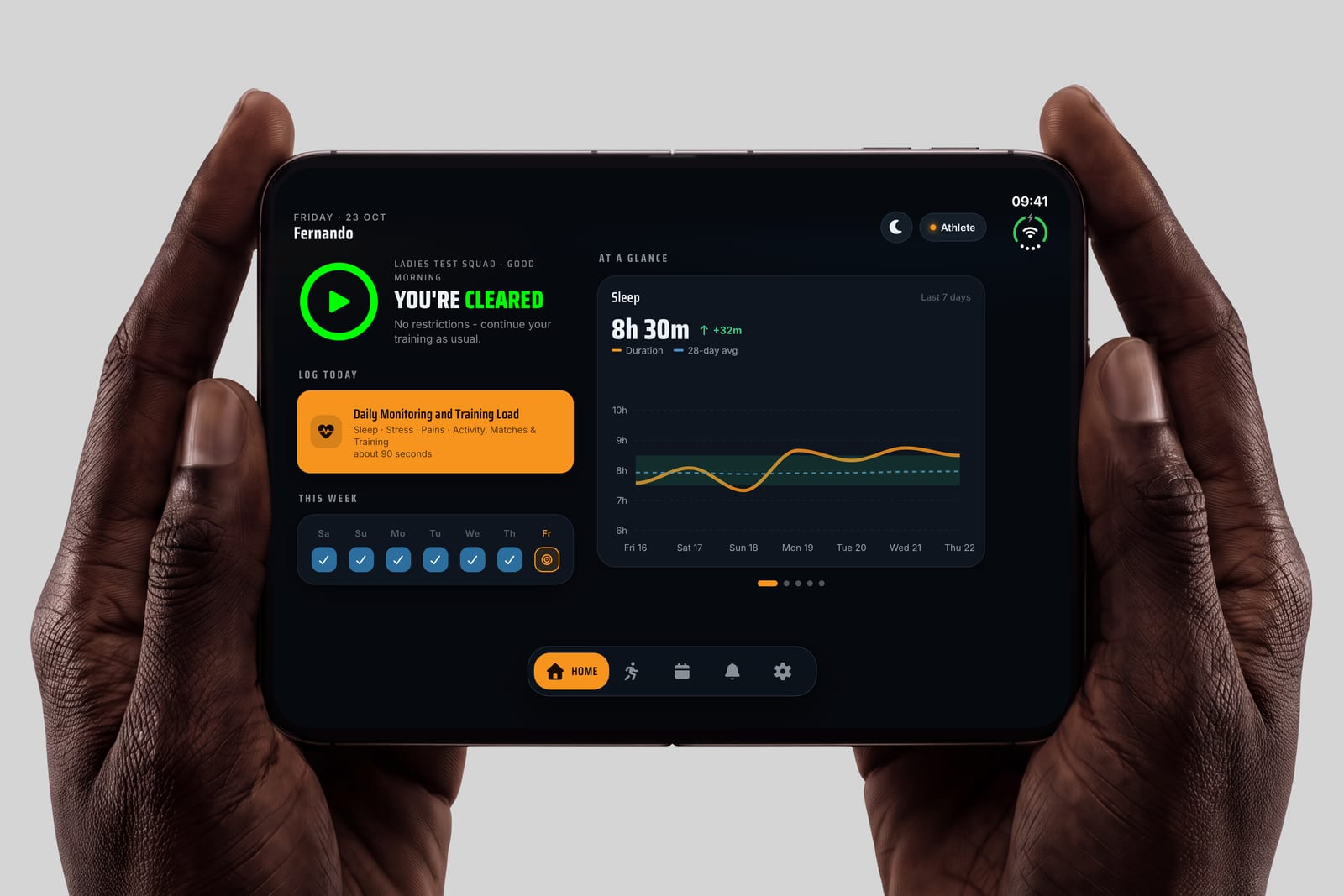
Most people who ask us for an app want their staff or customers to use something on their phones. That does not always mean an app from the App Store. Often a web application that works well on a phone does the same job, costs less to build and is simpler to look after. Sometimes an app is the right answer. Here is how we tell the difference.
What each one is
A web application runs in the browser. People open a link, sign in and use it on a phone, a tablet or a laptop. There is nothing to install, and when we change something, everyone has the new version the next time they open it.
An app is installed from the App Store or Google Play. It can use more of the phone, keep working with no signal, and sit on the home screen. It also has to go through store approval, and it needs updating as new versions of iOS and Android come out.
Most apps also need a web system behind them, for managing users, sending out work and seeing results. So an app is usually a second thing to build, on top of the web application, not instead of it.
When a web application is enough
People use it now and then, with a signal. Placing an order, checking a booking or filling in a form a few times a week works well in the browser.
You want it in front of people quickly. A link in an email gets people started. Asking customers to find and install an app loses some of them on the way.
Customers use it as well as staff. CJ Fresh Foods take orders from chefs and caterers through a mobile-friendly ordering portal, at any hour, on whatever phone they have. There is an Android app for customers who prefer one, but the portal does the work, and sales went up 50%.
When an app earns its place
People work with no signal. Field staff in shops, warehouses, basements and the countryside cannot rely on a connection. An app can save the work on the phone and send it when the signal comes back. The Dura player app works that way, so players can do their daily check-in wherever they are.
It needs the camera, a scanner or the microphone. Browsers can do some of this, but an app does it better and more reliably. NCI Resources field staff record audio alongside surveys of over 1,000 questions on their iPads. When an Oxspring client’s scanning hardware was discontinued, the software for the replacement Zebra barcode scanners was an Android app too.
People use it all day. If something is opened many times a day, being on the home screen, opening instantly and sending reminders makes a difference to whether it gets used. Daily completion is what Dura’s platform depends on.
The cost of an app after it is built
An app is not finished when it is in the store. Apple and Google change their rules and their operating systems every year, and apps need updating to keep up. Every change goes back through store approval. Budget for that, or have a supplier who looks after it for you as part of hosting and support.
We build apps in .NET MAUI, so one codebase runs on iPhone, Android, Windows and Mac. That keeps the cost down, but it is still more to maintain than a web application alone.
Start with the web, add the app if you need it
For most businesses we suggest starting with a web application that works well on a phone. If it turns out people need to work offline or use the camera, the app can be built on top of the same system later, without starting again.
Not sure which you need? Our app development and web applications pages have more detail, or get in touch and we will tell you which one fits.